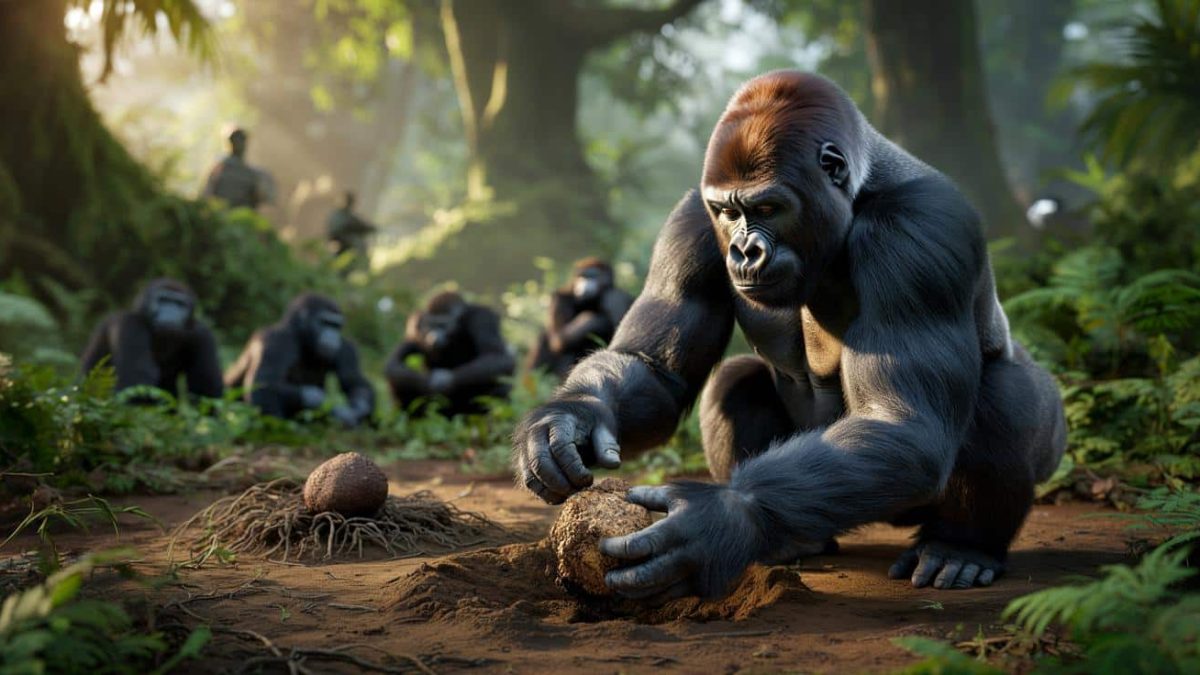
Deep in the heart of the Congolese rainforest, a remarkable discovery has left researchers awestruck. In a remote national park in northern Republic of Congo, a team of scientists has documented a behavior in gorillas that no one could have anticipated – the primates have been observed systematically hunting and consuming a hidden delicacy, truffles.
This unexpected finding not only sheds light on the complex feeding habits of these magnificent creatures but also challenges our understanding of gorilla ecology and behavior. As the researchers delve deeper into this phenomenon, a fascinating story unfolds, one that promises to redefine our perception of these gentle giants and the intricate web of relationships within their forest home.
A Silent Rainforest and a Persistent Question
The Nouabalé-Ndoki National Park, a vast expanse of pristine rainforest in the northern Republic of Congo, has long been a sanctuary for endangered gorillas. Here, in the heart of this verdant wonderland, a team of dedicated researchers has been quietly observing the daily lives of these apes, hoping to uncover the secrets hidden within their world.
For years, the researchers had noticed something peculiar about the gorillas’ feeding habits. While the apes were known to subsist on a diverse diet of leaves, fruits, and stems, there were moments when they would disappear into the undergrowth, only to reemerge with soil-stained hands and a satisfied expression. The question that lingered in the researchers’ minds was simple, yet profound: What were the gorillas searching for in the depths of the forest?
- ➡Forscher sind sicher: In diesen Räumen arbeitet dein Gehirn besser
- ➡Gartenlegende der Eisheiligen: Wer jetzt pflanzt, kann deutlich früher ernten
- ➡Übergabe der Olympischen Flagge: Frankreich bereitet sich auf die Spiele 2026 vor
- ➡Warum Laufschuhe für Frauen oft nicht passen – eine neue Studie deckt auf
It was a mystery that would soon be unraveled, shedding light on the hidden wonders of the Congolese rainforest and the remarkable adaptations of its primate inhabitants.
Gorillas Hunt for Hidden Truffles
As the researchers delved deeper into their observations, a remarkable discovery came to light: the gorillas were hunting and consuming a highly coveted delicacy – truffles. These subterranean fungi, prized for their earthy aroma and culinary value, had long evaded the attention of scientists studying gorilla behavior.
Through careful observation and analysis, the researchers documented the intricate process by which the gorillas located and extracted these elusive mushrooms. Using their sensitive sense of smell and dexterous hands, the apes would carefully sift through the soil, detecting the faint scent of the truffles and then meticulously excavating them from their underground hiding places.
The researchers were amazed to witness the level of skill and precision displayed by the gorillas during these foraging expeditions. The apes would use their long fingers to gently brush away the soil, exposing the prized fungal delicacies, which they would then carefully pluck and consume, savoring every bite.
- ➡Waschmaschine zur falschen Zeit: Warum Waschen zwischen 8 und 20 Uhr richtig teuer wird
- ➡Genius Trick: How Scratched Vinyl Records Become Stylish Decor Bowls in 5 Minutes
- ➡Warum ein scheinbar hilfloser Vogel im März meist nicht gerettet werden darf
- ➡Schneiden Sie Oleander jetzt richtig: So blüht er im Sommer wie verrückt
How Gorillas Learn the Art of Truffle Hunting
The discovery of this unexpected behavior raised intriguing questions about the cultural and social aspects of gorilla life. How did these apes acquire the knowledge and skills necessary to locate and consume truffles, a food source that is not typically associated with their diet?
The researchers found that the truffle-hunting behavior was not an isolated incident, but rather a deeply ingrained part of the gorillas’ culinary culture. By observing the interactions within the gorilla groups, the researchers determined that this knowledge was passed down from generation to generation, with older individuals teaching the younger ones the art of truffle foraging.
This transmission of cultural knowledge not only highlights the cognitive abilities of gorillas but also suggests that these primates possess a sophisticated understanding of their forest environment and the resources it provides. The ability to recognize and harvest a hidden food source like truffles demonstrates the remarkable adaptability and problem-solving skills of these magnificent creatures.
Local Knowledge Reshapes Conservation Strategies
The discovery of the gorillas’ truffle-hunting behavior has far-reaching implications for the conservation and management of these endangered primates. By understanding the importance of this food source to the gorillas, researchers and policymakers can now develop more effective strategies to protect the Congolese rainforest and ensure the survival of these iconic animals.
Previously, conservation efforts had primarily focused on the protection of the gorillas’ habitat and the reduction of threats such as poaching and deforestation. However, the new insights gained from the truffle research suggest that a more holistic approach is necessary, one that takes into account the intricate relationship between the gorillas and their environment.
Armed with this knowledge, conservation organizations can now work closely with local communities to incorporate traditional ecological knowledge and practices into their management plans. By empowering the people who live in and around the Nouabalé-Ndoki National Park, these efforts can ensure that the gorillas’ access to critical food sources, such as truffles, is safeguarded for generations to come.
The Significance of Truffle-Eating Gorillas
The discovery of gorillas hunting and consuming truffles has profound implications for our understanding of these remarkable primates. Beyond the sheer fascination of witnessing such an unexpected behavior, the findings shed light on the cognitive and cultural complexities of gorilla societies.
By recognizing the gorillas’ ability to adapt to their environment and exploit new food sources, researchers can better appreciate the flexibility and resilience of these animals. The transmission of truffle-hunting knowledge within the gorilla groups suggests a level of social learning and cultural inheritance that challenges the notion of gorillas as purely instinctual creatures.
Moreover, the implications of this discovery extend beyond the realm of gorilla studies. The relationship between the gorillas and the truffles they consume highlights the intricate web of interdependence that exists within the Congolese rainforest ecosystem. As we work to protect these endangered primates, we must also consider the preservation of the entire forest community, including the fungi and other organisms that sustain the gorillas’ way of life.
The Road Ahead for Research in the Congo
The discovery of gorillas hunting truffles in the Congolese rainforest has opened up a new chapter in the study of these magnificent primates. As the researchers continue to delve deeper into this phenomenon, they are poised to uncover even more insights about the complex behaviors and adaptations of gorillas.
With renewed vigor, the scientific community is now exploring the broader implications of this finding, seeking to understand how it fits into the larger picture of gorilla ecology and evolution. By collaborating with local communities and drawing on traditional ecological knowledge, the researchers hope to gain a more holistic understanding of the intricate relationships that sustain the Congolese rainforest and its inhabitants.
As the world increasingly recognizes the critical importance of preserving the world’s remaining rainforests, the story of the truffle-hunting gorillas serves as a powerful reminder of the wonders that still await discovery. Through continued research and conservation efforts, we can ensure that the secrets of the Congolese rainforest and the resilience of its primate guardians remain protected for generations to come.
- ➡Drei einfache Alltags-Tricks, die Ihr Gehirn schützen – Ein Neurologe verrät sie
- ➡Tiny Gold Balls Can Boost Solar Power Plants Almost Twofold
- ➡4-Euro-Schönheits-Hack: Wie dieser essence-Puder Augenringe verschwinden lässt
- ➡Ist Alufolie im Tiefkühler wirklich gefährlich? Die Wahrheit über ihre Sicherheit
Frequently Asked Questions
What is the significance of the discovery of gorillas hunting truffles?
The discovery of gorillas hunting and consuming truffles in the Congolese rainforest is significant because it challenges our understanding of gorilla behavior and ecology. It demonstrates the cognitive and cultural complexity of these primates, as they have developed the ability to locate and extract a hidden food source that is not typically associated with their diet.
How do gorillas learn the skill of truffle hunting?
The researchers found that the knowledge and skills required for truffle hunting are passed down from generation to generation within the gorilla groups. Older individuals teach the younger ones the techniques for locating and harvesting the subterranean fungi, highlighting the social and cultural aspects of gorilla behavior.
What are the implications of this discovery for conservation efforts?
The discovery of the gorillas’ reliance on truffles as a food source has prompted a rethinking of conservation strategies for these endangered primates. It emphasizes the need for a more holistic approach that considers the entire ecosystem and the intricate relationships within it, including the preservation of critical food sources like truffles.
How does this finding contribute to our understanding of gorilla evolution and adaptation?
The ability of gorillas to adapt to their environment and exploit new food sources, such as truffles, suggests a level of flexibility and resilience that challenges the notion of gorillas as purely instinctual creatures. This discovery sheds light on the cognitive and cultural complexities of gorilla societies, and how these primates have evolved to thrive in their rainforest habitat.
- ➡Ist es erlaubt, Lebensmittel kurz vor Ablauf einzufrieren? Eine Virologin klärt auf
- ➡Gentests enthüllen dunkle Geheimnisse eines Felsendorfes in Spanien
- ➡Tiles out, marble in: Why everyone is now remodeling their bathrooms
- ➡Influencer verfolgt Kleiderspenden mit AirTag und bringt Deutsches Rotes Kreuz in Erklärungsnot
What are the next steps for research on truffle-hunting gorillas?
With this new discovery, researchers are eager to delve deeper into the phenomenon of truffle-hunting among gorillas. By collaborating with local communities and drawing on traditional ecological knowledge, they hope to gain a more comprehensive understanding of the relationship between the gorillas and the Congolese rainforest ecosystem, and how this knowledge can inform future conservation efforts.
How can the public contribute to the protection of truffle-hunting gorillas?
Members of the public can support the conservation of truffle-hunting gorillas by advocating for the protection of the Congolese rainforest, donating to reputable conservation organizations, and raising awareness about the importance of preserving these remarkable primates and their unique behaviors.
What are the potential threats to the survival of truffle-hunting gorillas?
The main threats to the survival of truffle-hunting gorillas include habitat loss due to deforestation, poaching, and the disruption of the delicate balance within the rainforest ecosystem. Protecting the Congolese rainforest and ensuring the continued availability of critical food sources like truffles is essential for the long-term survival of these iconic primates.
How do truffles fit into the broader ecosystem of the Congolese rainforest?
Truffles play a crucial role in the Congolese rainforest ecosystem, serving as a food source for a variety of organisms, including the gorillas. The intricate web of relationships between the truffles, the gorillas, and the other components of the forest community highlights the importance of preserving the entire ecosystem to ensure the survival of all its inhabitants.