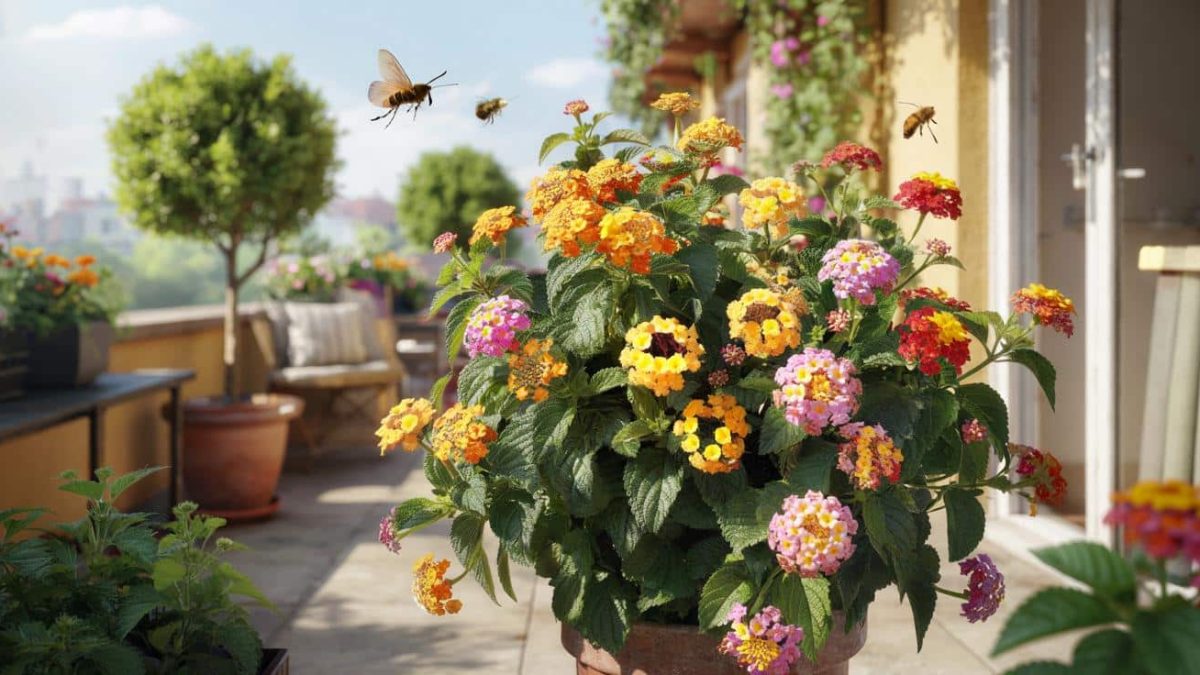
If you stroll through balconies and gardens in the summer, you’ll see geraniums, petunias, and hydrangeas everywhere. But a true all-rounder often leads a shadowy existence – the lantana. This hardy shrub is now making a well-deserved comeback in German gardens.
What makes the lantana so special? Its constant, long-lasting bloom, its versatility, and its resilience have earned it the nickname “immortal perennial.” From spring to the first frost, this plant captivates with its vibrant colors and delicate flowers. And the best part? Lantana requires little care and blooms reliably year after year.
Why Lantana is the Ideal Garden Companion
Lantana’s unbeatable advantages make it a must-have for any garden or balcony. Whether in a pot, as a border plant, or as a striking eye-catcher – this hardy shrub thrives in almost any location. Its resistance to heat, drought, and pests is truly impressive. Even inexperienced gardeners can easily cultivate and enjoy the lantana.
Another plus: the lantana is a true magnet for beneficial insects like bees and butterflies. Its nectar-rich flowers provide an important source of food, especially in times of dwindling biodiversity. So the lantana not only brightens up the garden, but also makes an important contribution to the ecosystem.
- ➡Forscher sind sicher: In diesen Räumen arbeitet dein Gehirn besser
- ➡4-Euro-Schönheits-Hack: Wie dieser essence-Puder Augenringe verschwinden lässt
- ➡Tiles out, marble in: Why everyone is now remodeling their bathrooms
- ➡Waschmaschine zur falschen Zeit: Warum Waschen zwischen 8 und 20 Uhr richtig teuer wird
Of course, like any plant, the lantana has certain requirements that should be considered when planting. Finding the right location and providing the right care are key to the plant’s long-term success. But with a little know-how, even beginners can easily master the care of this versatile garden star.
Finding the Perfect Spot for Lantana
Lantana thrives best in a sunny, warm location. It prefers well-drained, nutrient-rich soil. The plant is quite hardy and can also tolerate partial shade, but its bloom will be less abundant in shady areas. When choosing a planting site, make sure the soil doesn’t stay wet for too long, as this can quickly lead to root rot.
If you want to grow lantana in a pot, choose a large, deep container with drainage holes. This gives the roots enough space to develop and prevents waterlogging. A potting soil specially formulated for balcony and terrace plants is ideal.
Once the right spot has been found, lantana can be planted out from May onwards. It is best to choose a sheltered, sunny location, as the plant is sensitive to frost and should be protected in the first year.
Proper Care for Lantana
Lantana is considered a low-maintenance plant, but it does have certain care requirements that should be met. Regular watering is particularly important, especially during dry spells. The soil should never dry out completely, but also not become waterlogged.
Fertilizing every four to six weeks with a balanced, liquid fertilizer supports the plant’s vigorous growth and abundant blooms. Lantana is a true heavy feeder and needs sufficient nutrients to unfold its full potential.
Regular pruning also promotes a dense, bushy growth habit and prevents the plant from becoming too leggy. Cutting back the shoots in spring and after the first flowering period stimulates new growth and flowering.
Overwintering Lantana Safely
While lantana is generally quite hardy, it is not always winter-proof, especially in colder regions. In regions with mild winters, the plant can remain outdoors all year round. In areas with frost, however, it is important to provide additional protection.
- ➡Nie mehr Spüli kaufen: Mit diesem 3-Zutaten-Trick wird dein Abwasch günstiger und grüner
- ➡Riesige Krebs-Studie: Welche Ernährungsform unser Risiko wirklich senkt
- ➡Wie eine harmlose Gewohnheit die Nieren Ihrer Katze belasten kann
- ➡Frühlingssauberkeit zum Minimalpreis: 6 geniale Action-Helfer, die Ihre Wohnung retten
Potted lantana should be overwintered in a cool, bright place, such as a greenhouse or conservatory. The soil should be allowed to dry out slightly between waterings. Outdoor lantana can be cut back and covered with a thick layer of mulch or fleece for the winter.
With the right overwintering strategy, lantana can reliably survive the cold season and delight gardeners with its vibrant blooms year after year.
Lantana: A Boon for Insects, but a Danger for Pets
Lantana’s nectar-rich flowers are a true magnet for bees, butterflies, and other beneficial insects. The plant provides an important source of food, especially in times of declining insect populations. Gardeners can thus make an important contribution to species conservation by planting lantana.
However, the plant’s popularity has a downside: lantana is toxic to pets, especially cats and dogs, if ingested. The leaves, flowers, and berries contain substances that can cause vomiting, diarrhea, and even neurological disorders in animals. Responsible pet owners should therefore take appropriate precautions when growing lantana.
- ➡Seit ich diesen Marmorkuchen kenne, will meine Familie keinen anderen mehr
- ➡Mehr Gefahr als gedacht: Wie Cannabis das Teenager-Gehirn beeinflusst
- ➡Ist es erlaubt, Lebensmittel kurz vor Ablauf einzufrieren? Eine Virologin klärt auf
- ➡Einfache Methode mit Alufolie: So schützen Sie Ihre Bankkarte vor Datendieben
Despite this caveat, the benefits of this robust, long-blooming plant clearly outweigh the risks. With the right location and care, lantana can become a true star in any garden.
| Advantages of Lantana | Disadvantages of Lantana |
|---|---|
|
|
“Lantana is a true all-rounder that can enhance any garden with its vibrant colors and long-lasting blooms. With the right location and care, this hardy shrub will delight gardeners year after year.”
– Sandra Müller, Gardening Expert
“Lantana is a fantastic choice for gardeners who want to attract beneficial insects and support biodiversity. Its nectar-rich flowers provide an important food source, especially in times of declining insect populations.”
– Dr. Julia Schmitt, Entomologist
“While lantana is generally quite hardy, it’s important to protect the plant from frost, especially in its first year. Proper overwintering is key to ensuring the plant’s long-term success.”
– Thomas Weber, Horticulturist
Also Read
- ➡Frühling wird zur Todesfalle: Warum Ihre Katze jetzt lieber drinnen bleiben sollte
- ➡Senioren wenden sich von Portugal ab: Warum eine Kurstadt im Südwesten jetzt lockt
- ➡Gentests enthüllen dunkle Geheimnisse eines Felsendorfes in Spanien
- ➡Drei einfache Alltags-Tricks, die Ihr Gehirn schützen – Ein Neurologe verrät sie
Lantana may not be as well-known as other summer bloomers, but this unsung hero deserves a place in every garden. With its constant, vibrant flowers, its resilience, and its appeal to beneficial insects, lantana is a true all-rounder that will delight gardeners for years to come.
How long does lantana bloom?
Lantana is a true perennial bloomer, providing color from spring to the first frost. With the right care, it will reward gardeners with a continuous display of vibrant flowers throughout the entire growing season.
Is lantana easy to grow?
Yes, lantana is considered a low-maintenance plant that is easy to cultivate, even for beginner gardeners. As long as it is planted in a sunny, well-drained location and receives regular watering and fertilizing, it will thrive with minimal effort.
Does lantana attract beneficial insects?
Absolutely! Lantana’s nectar-rich flowers are a true magnet for bees, butterflies, and other pollinating insects. By planting lantana, gardeners can make an important contribution to supporting biodiversity in their own backyard.
- ➡Sensationeller Urvogelfund: Deutsches Fossil liefert neuen Beweis für Darwins Evolutionstheorie
- ➡Schluss mit Klopapier: Dieses Wasser-System macht das Bad wirklich sauber
- ➡Säen Sie diese Turbo-Blumen jetzt im März – Rekord-Blüte schon im späten Frühjahr
- ➡Ist Alufolie im Tiefkühler wirklich gefährlich? Die Wahrheit über ihre Sicherheit
How do I overwinter lantana?
Overwintering requirements for lantana depend on the climate. In mild regions, it can remain outdoors year-round. In colder areas, potted plants should be brought indoors to a cool, bright location, while outdoor plants can be cut back and mulched for protection.
Is lantana toxic to pets?
Yes, unfortunately lantana contains substances that are toxic to pets, especially cats and dogs, if ingested. Pet owners should take appropriate precautions when growing this plant and keep it out of reach of curious animals.
When is the best time to plant lantana?
Lantana can be planted out from May onwards, once the risk of frost has passed. It’s best to choose a sheltered, sunny location to give the plant the best start, especially in its first year.
Does lantana require regular pruning?
Yes, regular pruning helps keep lantana plants compact and bushy. Cutting back the shoots in spring and after the first flowering period encourages new growth and abundant blooms throughout the season.
How often should I fertilize lantana?
Lantana is a heavy feeder and benefits from regular fertilization every 4-6 weeks during the growing season. Using a balanced, liquid fertilizer will support the plant’s vigorous growth and stunning floral display.