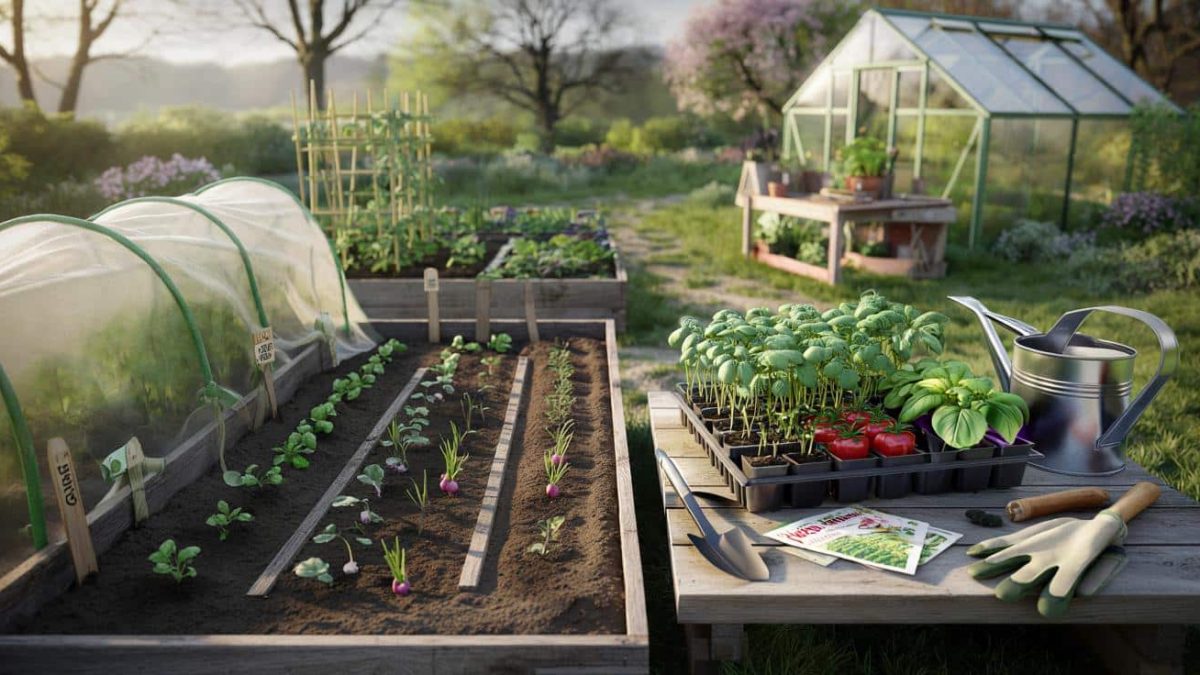
The birds are singing, the sun is gaining strength, and the ground is thawing – for hobby gardeners, this is not just a romantic detail, but a hard-hitting starting signal. The race is on to prepare the vegetable bed for the upcoming season. Certain crops need to be sown now, while others should still wait a bit longer. We’ll guide you through the essential tasks for your vegetable garden in March.
The Heat-Loving Ones: These Summer Kings Need Indoor Protection Now
While the first brave sprouts may poke their heads out of the soil, the real temperature lovers still need protection. Tomatoes, peppers, and eggplants, for example, should not yet be planted directly in the vegetable bed. These heat-loving plants can only withstand mild temperatures to a limited extent and would be damaged by cold nights or late frosts.
Instead, they should first be pre-cultivated in a greenhouse or on a windowsill. Here, the young plants can develop their first true leaves protected from the elements. Only when the ice saints (around mid-May) have passed and the nights are reliably warm, can they be planted out in the vegetable bed.
A tip: Mark the planting site for these summer queens in the vegetable bed so you don’t forget where they will later find their permanent home.
In the Bed, the Early Shift Begins: What is Allowed Directly Into the Open Ground
While the temperature-sensitive crops still need to wait a little longer, there are many vegetables that can now be sown or planted directly in the vegetable bed. These include:
| Vegetable | Sowing/Planting Time |
|---|---|
| Radishes | March/April |
| Spinach | March/April |
| Lettuce | March/April |
| Peas | March/April |
| Carrots | March/April |
| Onions | March/April |
The key is to choose a location in the vegetable bed that is as sunny and sheltered as possible. This helps the young plants to get off to a good start despite the still low temperatures.
Care After Germination: Patience Instead of Watering Non-Stop
Once the first seedlings have emerged, the intensive care for the vegetable bed begins. It’s important not to overwater the young plants, as this can quickly lead to fungal diseases or other problems. Instead, it’s better to wait patiently until the soil has dried out a bit before watering again.
At the same time, weeding is an important task in March. Removing unwanted plants ensures that the vegetables can develop unhindered and get the necessary nutrients from the soil.
A little tip: Mulching the vegetable bed with a layer of straw or leaves helps to retain moisture and suppress weeds. This makes your work in the garden much easier.
The Reward for March Work: Harvest Wave from June to August
The effort put into the vegetable bed in March will pay off in the following months. From June onwards, the first harvests can be expected, and by high summer, you’ll be swimming in a veritable abundance of vegetables.
Especially the fast-growing crops like radishes, lettuce, and spinach will provide a steady supply of fresh produce in the coming weeks. But even the slow-growing vegetables like carrots and onions will reward your hard work with a rich harvest.
- ➡Dieses unterschätzte Talent verrät außergewöhnliche emotionale Intelligenz
- ➡Drei einfache Alltags-Tricks, die Ihr Gehirn schützen – Ein Neurologe verrät sie
- ➡Gentests enthüllen dunkle Geheimnisse eines Felsendorfes in Spanien
- ➡Der unscheinbare Schattengänger: Wie die Lungenkraut-Blüte deinen Garten in ein Insektenparadies verwandeln kann
So the March gardening tasks are not only a necessary evil, but also an investment in a bountiful vegetable harvest in the following months. With a little diligence now, you can look forward to delicious and healthy homegrown vegetables all summer long.
Helpful Additional Information for a Strong Seasonal Start
To ensure a successful vegetable garden in 2023, here are a few more tips:
| Tip | Explanation |
|---|---|
| Test the soil | Before sowing, it’s a good idea to have the soil tested. This way you can find out if it needs to be amended with any nutrients. |
| Create a crop rotation | Planting the same vegetables in the same spot year after year can deplete the soil. A thoughtful crop rotation helps keep the soil healthy. |
| Use weather protection | Cold frames, fleece, or small greenhouses provide valuable protection for sensitive plants in the early season. |
| Plan the layout | A well-planned arrangement of the different crops saves space and ensures an optimal use of the available area. |
With these tips, you’re well on your way to a successful start to the vegetable gardening season. The anticipation of the first homegrown harvests makes the hard work in March more than worthwhile.
- ➡Das Lidl-Bistroset für 55 Euro: Der Platzwunder für kleine Balkone und Gärten
- ➡Frühling wird zur Todesfalle: Warum Ihre Katze jetzt lieber drinnen bleiben sollte
- ➡Frühlingssauberkeit zum Minimalpreis: 6 geniale Action-Helfer, die Ihre Wohnung retten
- ➡Wie ein paar einfache Sätze die Beziehung stärken können
“Gardening is not just a hobby, it’s a way of life. The rewards of growing your own food are immeasurable.” – Julia Charmain, Sustainable Agriculture Researcher
So roll up your sleeves and get to work in the vegetable bed. The time is now to lay the foundation for a bountiful summer harvest.
FAQ: Vegetable Gardening in March
When is the best time to sow radishes?
Radishes can be sown directly in the vegetable bed from March/April onwards. They are one of the first vegetables that can be planted in the open ground.
Do I have to pre-cultivate tomatoes, peppers and eggplants?
Yes, these heat-loving vegetables should not be planted directly in the vegetable bed in March. They need to be pre-cultivated in a greenhouse or on a windowsill first, and only planted out later when the ice saints have passed.
- ➡Schluss mit Klopapier: Dieses Wasser-System macht das Bad wirklich sauber
- ➡Säen Sie diese Turbo-Blumen jetzt im März – Rekord-Blüte schon im späten Frühjahr
- ➡Waschmaschine zur falschen Zeit: Warum Waschen zwischen 8 und 20 Uhr richtig teuer wird
- ➡Studie enthüllt: In diesem Alter fühlen wir uns im Leben am erschöpftesten
How often should I water the vegetable bed in March?
It’s important not to overwater the young plants. Wait patiently until the soil has dried out a bit before watering again. Checking the soil moisture regularly is the best way to determine the right watering schedule.
What can I do against weeds in the vegetable bed?
Weeding is an important task in March. Removing unwanted plants ensures that the vegetables can develop unhindered. Mulching the bed with straw or leaves also helps suppress weeds and retain moisture.
When can I expect the first harvests from the vegetable bed?
From June onwards, the first harvests can be expected, especially for fast-growing crops like radishes, lettuce and spinach. By high summer, a bountiful vegetable harvest will reward your hard work in March.
Do I need to rotate my vegetable crops?
Yes, a thoughtful crop rotation is recommended to keep the soil healthy. Planting the same vegetables in the same spot year after year can deplete the soil.
- ➡Dieser unscheinbare Garten-Vogel verrät, wie gesund dein Zuhause wirklich ist
- ➡Was im Alltag verrät, ob jemand eine narzisstische Persönlichkeit hat
- ➡Sensationeller Urvogelfund: Deutsches Fossil liefert neuen Beweis für Darwins Evolutionstheorie
- ➡So stoppen Sie mit dieser 24-Stunden-Regel teure Spontankäufe
How can I protect sensitive plants in early spring?
Cold frames, fleece or small greenhouses provide valuable protection for temperature-sensitive plants in the early season. This helps them get off to a good start despite the still cool temperatures.
How important is the layout of the vegetable bed?
A well-planned arrangement of the different crops saves space and ensures an optimal use of the available area. Taking the time to plan the layout carefully pays off in the long run.